
The Mine Closed. The Case Didn’t: Base Titanium Limited v Kiswili and the Unravelling of Section 155 of the Kenyan Mining Act
Issue 007 — A Critical Commentary
I. A Fight Over a Mine That No Longer Exists
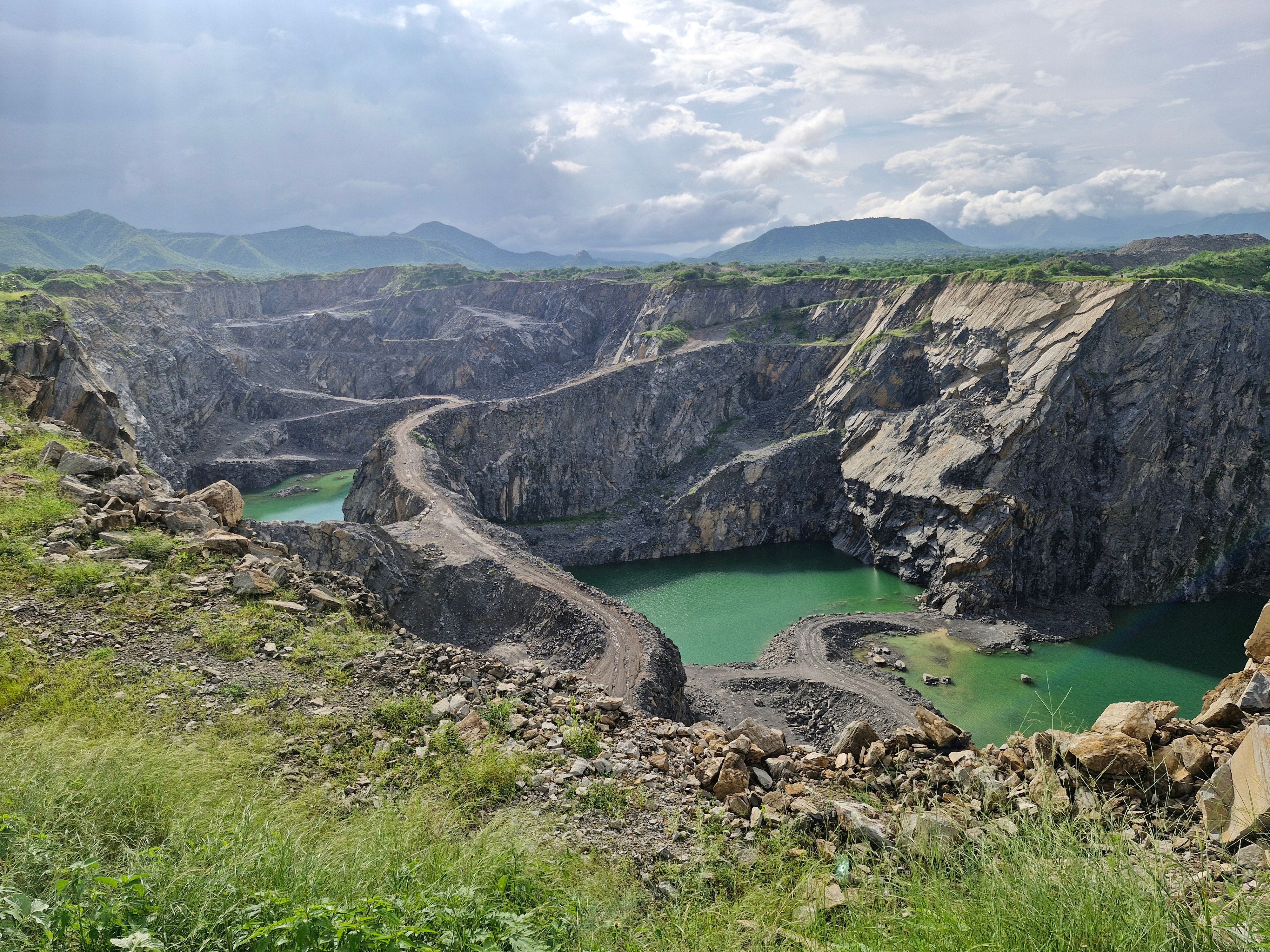
Base Titanium shipped its last bulk cargo of Kwale ore out of the Mombasa port terminal in February 2025, eleven years after the Commissioner of Mines and Geology granted it a licence to strip titanium, rutile, zircon, and ilmenite out of the ground near Msambweni [3]. The heavy machinery is currently being decommissioned. The tailings storage facility, which is forty-five million tonnes of slime spread across roughly 270 hectares, is now somebody else’s fifteen-year rehabilitation and stabilisation problem. By any ordinary commercial lens, the story of Base Titanium in Kwale is over, but its litigation is not.
On 15th May 2026, the Supreme Court dismissed the appeal by Base Titanium in a dispute that has now taken five years, circled across three courts, survived a preliminary objection on the Court’s own jurisdiction, and a rebuke to counsel delivered from the bench; and sent the underlying petition back to the Environment and Land Court to be tried on the merits. All this has happened years after the mine that supposedly caused the harm stopped operating [43-45]. That alone would make an odd footnote. What elevates it from a footnote to this headline is what the Court had to decide to get there: for the first time at the apex level, it was forced to settle the jurisdictional contest between the Environment and Land Court and the specialised administrative dispute mechanism built into section 155 of the Mining Act. This standoff, on the reasoning adopted here, extends well past mining to every sectoral statute that mandates a regulator as a first instance port of call at disputes before a claimant can approach the court.
This author highlighted this case the same day it was delivered, in the usual short IRAC note that went round the WhatsApp groups back when this publication was nothing more than that: a post, not a platform. It deserved more than a heads-up then, and it still hasn’t had any practitioner commentary anywhere since, until now. Kenya Law shows zero documents citing this judgment as of the time of this writing, which, for a ruling with this many implications across the extractives and regulatory bar, is itself a matter worth concern. But the more useful exercise is unpacking exactly what the Court settled, what it left wide open, and how a five-judge bench that spent nine paragraphs defending its own jurisdiction to hear the appeal at all moved rather quickly through the substantive question everyone would be citing this case for.
II. The Facts
Michael Kiswili, suing on his own behalf and for sixty-five other residents of Mavumo “B” village in Msambweni, filed ELC Petition No. 3 of 2021, alleging that Base Titanium had commenced and conducted its mining operations without a proper Environmental Impact Assessment and without adequate public participation, causing environmental degradation, water pollution, excessive noise, and adverse health effects to the village [4]. He sought declarations that the residents’ Article 42 rights had been violated, an order compelling environmental restoration, and, crucially, orders compelling NEMA to revoke the EIA licence and the Commissioner of Mines to revoke the mining licence itself [5-6].
The defence mounted by Base Titanium was never about the facts. Instead, the company moved to strike out the petition on a pure jurisdictional objection: section 155(b) of the Mining Act vests the Cabinet Secretary for Mining, Blue Economy and Maritime Affairs with original jurisdiction over “any wrongful act committed or omitted in the course of prospecting and mining operations”. It argued that the ELC’s role is confined to an appeal under section 157 once the Cabinet Secretary has ruled [8], [9], [40]. NEMA and the Attorney General equally brought a separate objection grounded in the exhaustion doctrine: section 129 of EMCA, section 9(2) and (3) of the Fair Administrative Action Act, Article 159(2) of the Constitution. On their part, they argued that the petition was a nullity for having bypassed the Authority’s own internal dispute mechanisms [10]. Justice Dena then sitting at the ELC in Kwale (and now at Winam Court, Siaya) rejected both objections on 10th February 2022, holding that a claim seeking a declaration that Article 42 rights had been denied fell within the Court’s original jurisdiction under Article 162(2)(b) as read with section 13(2) and (3) of the ELC Act [11].
The Court of Appeal at Mombasa (Murgor, Laibuta and Ngenye-Macharia, JJ.A) affirmed this ruling on 18th July 2025. But, more importantly, it did so by introducing a specific analytical angle: the “predominant purpose test”, holding that the dominant purpose of Kiswili’s petition was the enforcement of the right to a clean and healthy environment, and that section 155 of the Mining Act therefore did not oust the ELC’s constitutional jurisdiction [13]. Base Titanium’s appeal to the Supreme Court, filed as of right under Article 163(4)(a), not only faulted that finding directly, but also raised something else: that the Court of Appeal violated the company’s right to a fair hearing under Article 50 by introducing and applying the predominant purpose test without inviting submissions from any party on it [19]. In response, Kiswili filed a preliminary objection of his own, arguing that Base Titanium’s appeal touched no constitutional question at all and, absent certification under Article 163(4)(b), had no business being before the Supreme Court in the first place [16], [21]. And in a detail that is worth close attention here, the Commissioner of Mines and the Attorney General, who were perceived to be on Base Titanium’s side of the dispute as far as jurisdiction was concerned, filed their own Notice of Grounds Affirming the Decision taking the position that whereas the “predominant purpose test” was never “an issue framed for determination,” it was merely the Court of Appeal’s own case analysis of the pleadings before it [18]. Before the apex Court, therefore, were three respondents, three different theories of what the test even was. This is why the Supreme Court had rather more sorting out to do than the eventual length of the judgment it produced.
III. Determination
A. The Court Restates Its Own Jurisdiction (paras 24–32)
Before touching the merits, the Court had to clear Kiswili’s threshold objection that no Article 163(4)(a) appeal lay at all. It did so by restating the settled test from Lawrence Nduttu, Joho v Shahbal, and John Florence Maritime Services; all for the proposition that jurisdiction as of right attaches only where a specific constitutional provision was genuinely in issue for interpretation or application before both the High Court (or courts of equal status) and the Court of Appeal [26–27], [31]. Applying that test, the Court found that “at the heart of this dispute” was the interpretation and application of Article 162(2)(b), and that both superior courts below had in fact interpreted that provision in reaching their conclusions on jurisdiction [29–30]. Therefore, the objection was overruled, effectively allowing the appeal to proceed [32].
B. Counsel, Read the Constitution (para 33)
Then, without being moved by any party or based on any ground of appeal, the Court paused to address something that happened at the bar during oral highlighting on 12th March 2026. Counsel for Kiswili, the very respondent who had filed the preliminary objection insisting no Article 163(4)(a) jurisdiction existed absent certification under 163(4)(b), was asked to clarify his position, and told the bench that a party moving the Supreme Court on appeal is required to rely on both Article 163(4)(a) and 163(4)(b) simultaneously [33]. The Court’s response is worth quoting in full for what it says about the state of appellate advocacy before it: “This is an incorrect position, and we must point out that this Court has numerous decisions on the said issue” [33]. The Court relays this simply as “a caution to all counsel appearing before this Court” rather than a direct chastising of one advocate [33]. But five justices of the apex court taking the trouble to correct a licensed advocate’s basic misunderstanding of the two limbs of Article 163(4), on the record, in a reported judgment, is not a small thing. It should be interpreted alongside a worrying pattern this publication has tracked before: Counsel arriving at the Supreme Court without having done the reading.
C. Section 155 Loses (paras 34–43)
On the substance, the Court set out Article 162(2) and (3) and section 13 of the ELC Act in full [35–37], and characterised the statutory grant of jurisdiction to the ELC over “mining, minerals and other natural resources” disputes, read with the saving clause preserving the Court’s power to hear Article 42, 69 and 70 claims, as leaving “no room for conjecture” [36–37]. It then applied, without fully harmonising whether it was applying a formal legal test or simply endorsing a factual characterisation, the predominant purpose framework to Kiswili’s pleadings, concluding that “the dominant issue in this case was the impact of the mining activities undertaken by the appellant, on the 1st respondent’s right to a clean and healthy environment” [38–39].
Having set out the five specific heads of Cabinet Secretary jurisdiction under section 155, including boundary disputes, wrongful acts in the course of mining operations, pump and pipeline claims, water priority disputes, and compensation assessment [40], the Court then delivered its central finding in a single sentence: “the Cabinet Secretary has no jurisdiction to determine alleged violations of the Constitution, this is a preserve for the ELC” [41]. Its reasoning for this holding is informed by the Ramogi “bootstraps” doctrine, effectively citing the High Court’s position that a claim genuinely seeking to enforce constitutional rights (as opposed to one merely dressed in Bill of Rights language as a pretext for court access) is not barred by the exhaustion doctrine [41]. The Court similarly relies on its own earlier nuanced approach in Nicholus v Attorney General that the mere availability of an alternative remedy does not oust constitutional jurisdiction where that remedy is inadequate [42]. The appeal was dismissed, the Court of Appeal affirmed, and in the line that will matter most to anyone still standing in this litigation, the ELC petition was ordered to proceed to a full merits hearing five years after it was filed and roughly two years after the mine itself stopped running [43-45].
IV. Critique
A. The Fair Hearing Argument That the Court Refused to Unpack
Ground (v) of Base Titanium’s petition of appeal was not a wishaway point. It alleged that the Court of Appeal had violated the company’s Article 50 right to a fair hearing by introducing and relying on the predominant purpose test without any party having made submissions on it [19]. That is a serious procedural complaint, and by relying on its own analysis, the Court failed to test this argument. However, examined from all angles, the Supreme Court’s analysis in full, at paragraphs 34 to 43, contains no single sentence addressing it directly. The Court proceeds to apply the very same predominant purpose framework itself, effectively ratifying the Court of Appeal’s approach by using it, without ever pronouncing on whether introducing it without submissions was procedurally sound in the first place. A specific, pleaded ground of appeal simply went unanswered. For advocates whose bread and butter is finding exactly this kind of gap in an otherwise tidy judgment, it is difficult to imagine a more obvious one.
B. Test or Description? The Court Fails to Tell
The Commissioner of Mines and the Attorney General, parties with every institutional motivation to demand clarity on the jurisdiction question, specifically warned the Court that “the predominant purpose test” was not a legal test at all, but the Court of Appeal’s own case-specific characterisation of the pleadings, facts, and evidence before it [18]. This is not a lazy distinction. If predominant purpose is a formal jurisdictional test of general application, every advocate drafting a petition against a licensed operator in a regulated sector, be it mining, energy, water, fisheries, now has a template: plead the Bill of Rights violation as the dominant relief sought, relegate the sectoral claim to a subsidiary prayer, and the specialised administrative mechanism (the sector’s own statute built for exactly this dispute) becomes optional. If, on the other hand, it is merely a descriptive label the Supreme Court borrowed to explain why these pleadings, on these facts, happened to sound predominantly constitutional, then its implication as a precedent is far narrower, and every future case will turn on its own facts regardless of how cleverly the petition is drafted. The Supreme Court had this distinction placed directly in front of it by two respondents and simply did not speak unequivocally about it [18], [38–39]. The result is that advocates must now grapple with the ambiguity.
C. A Bare Assertion Where Ramogi Demanded Analysis
Paragraph 41 is the fulcrum of this judgment, and it is one sentence of assertion rather than a carefully drafted explanation or application of the doctrine it seeks to restate. Having just set out, in the Court’s own words, that section 155(b) of the Mining Act gives the Cabinet Secretary jurisdiction over “any wrongful act committed or omitted in the course of prospecting and mining operations, by any persons against any other person” [40], the Court simply declares that the Cabinet Secretary “has no jurisdiction to determine alleged violations of the Constitution” and moves on [41]. Crucially, the language deployed by the Court in paragraph 40 is overly expansive, broad enough on its face to capture environmental degradation and pollution claims as wrongful acts, with head (e) further covering “assessment and payment of compensation” [40]. The Court quotes Ramogi‘s bootstraps language in full, including the specific warning that constitutional relief is unavailable where the claimed violation is “merely framed in Bill of Rights language as a pretext to gain entry to the Court” [41]. But it never tested Kiswili’s petition against that standard. Was this a genuine constitutional claim, or a wrongful-act-and-compensation claim clothed in an Article 42 apparel to bypass a statutory mechanism that would have required proof of loss and a Cabinet Secretary’s inquiry rather than a full constitutional trial? The Court had the time, disposition, and space to answer that question conclusively as the crux of this judgment, and chose not to utilise it.
D. The Structural Problem in Paragraphs 24 to 32
There is a structural problem here that nobody appears to have noticed, including the parties. Kiswili’s preliminary objection said the Supreme Court had no business hearing this appeal at all absent certification under Article 163(4)(b) [16], [21]. The Court answered that by holding the appeal fell within 163(4)(a) because the dispute involved an interpretation of Article 162(2)(b) below [29–32], which is to say, the Court used its conclusion on the merits question (does Article 162(2)(b) confer original ELC jurisdiction over this kind of dispute) to manufacture its own threshold jurisdiction to decide that very question. Every jurisdictional appeal of this nature can be pleaded the same way: draft the underlying jurisdictional dispute as a question of “interpretation and application” of whichever constitutional provision an advocate chooses as operative, and Article 163(4)(a) caves in as of right, no certification required. If that reasoning is taken at face value, Article 163(4)(b)’s certification requirement has very little left to do in jurisdictional appeals specifically. This would be a strange outcome for the Court to arrive at in a judgment that spends nine paragraphs examining its own jurisdiction as a serious threshold question [24–32], then ultimately responds to it by assumption.
V. Key Takeaways for Advocates
Plead the constitutional claim as dominant, and push for it. Where a client’s grievance against a mining, energy, or water sector operator falls partly in a specialised statutory mechanism and partly in Article 42, 69, or 70, this judgment rewards framing the constitutional relief as the pivot point of the petition. But given the unresolved Ramogi bootstraps question at IV.C above, frame it in a genuine way by pleading specific, non-duplicative constitutional harm, not merely a constitutional breach over a compensation claim. This is because a future bench, which is more conservative than this one, may actually apply the bootstraps test the Supreme Court quoted but did not use.
Section 155 of the Mining Act is no longer a reliable jurisdictional shield. Advocates defending petitions relating to environmental or health harm can no longer assume a strike-out application grounded in section 155 will succeed merely because the underlying facts touch mining operations. This holding will be cited well beyond mining, expect it to be argued as obiter against the Energy Act’s section 36 mechanism, EMCA’s section 129 process, and any other sectoral ADR clause standing between a claimant and the ELC or High Court.
Do not assume “predominant purpose” is a settled doctrine. Instead, argue its status, not just its application. Given the unaddressed tension detected at the judgement’s IV.B, counsel on either side should not simply argue whether the test is satisfied on the facts; argue, as the 3rd and 4th respondents tried to do here, what the test actually is and whether it should be elevated beyond this case’s own facts.
Get your Article 163(4) submissions right before you appear before the Court. Paragraph 33 is not incidental. The distinction between the “as of right” route under 163(4)(a) and the certification route under 163(4)(b) is foundational Supreme Court practice, and getting it very wrong at the bar invites exactly the kind of public correction recorded here.
VI. Conclusion
Uncloth it of the Kwale geography and the titanium, and what the Supreme Court did on 15th May 2026 was resolve, casually, in a judgment that spends more paragraphs on its own jurisdiction than on the substantive question everyone actually cares about, a structural question that defines every sectoral regulatory dispute in the country. That structural question is this: when does a specialised administrative dispute mechanism give way to constitutional litigation before the ELC or the High Court? The answer the Court gave is charitable to claimants but correspondingly brutal to operators, and it arrived without the doctrinal rigour the question deserved. The judgement leaves wide open an unaddressed fair hearing ground, an unexplained status for its own central analytical framework, and a fulcrum paragraph that asserts rather than reasons. Base Titanium got its (procedural) day in court relating to the jurisdiction question, but lost it completely on substance: Kiswili and his sixty-five co-petitioners now get the merits trial they have been waiting five years for, against a mine that no longer exists. Here’s the bottom line: Everyone else practising in this space now has a precedent whose limits nobody has yet tested, in a corner of the law reports that, until this piece, nobody had bothered to read closely.
Gody Mwango is an advocate at Mwango Law Advocates, Mombasa, specialising in constitutional litigation, judicial review, and commercial law. He is the founder and managing editor of Mwango Law Review.